What Is a Strategic IVF Reattempt? A Patient's Guide to Trying Again

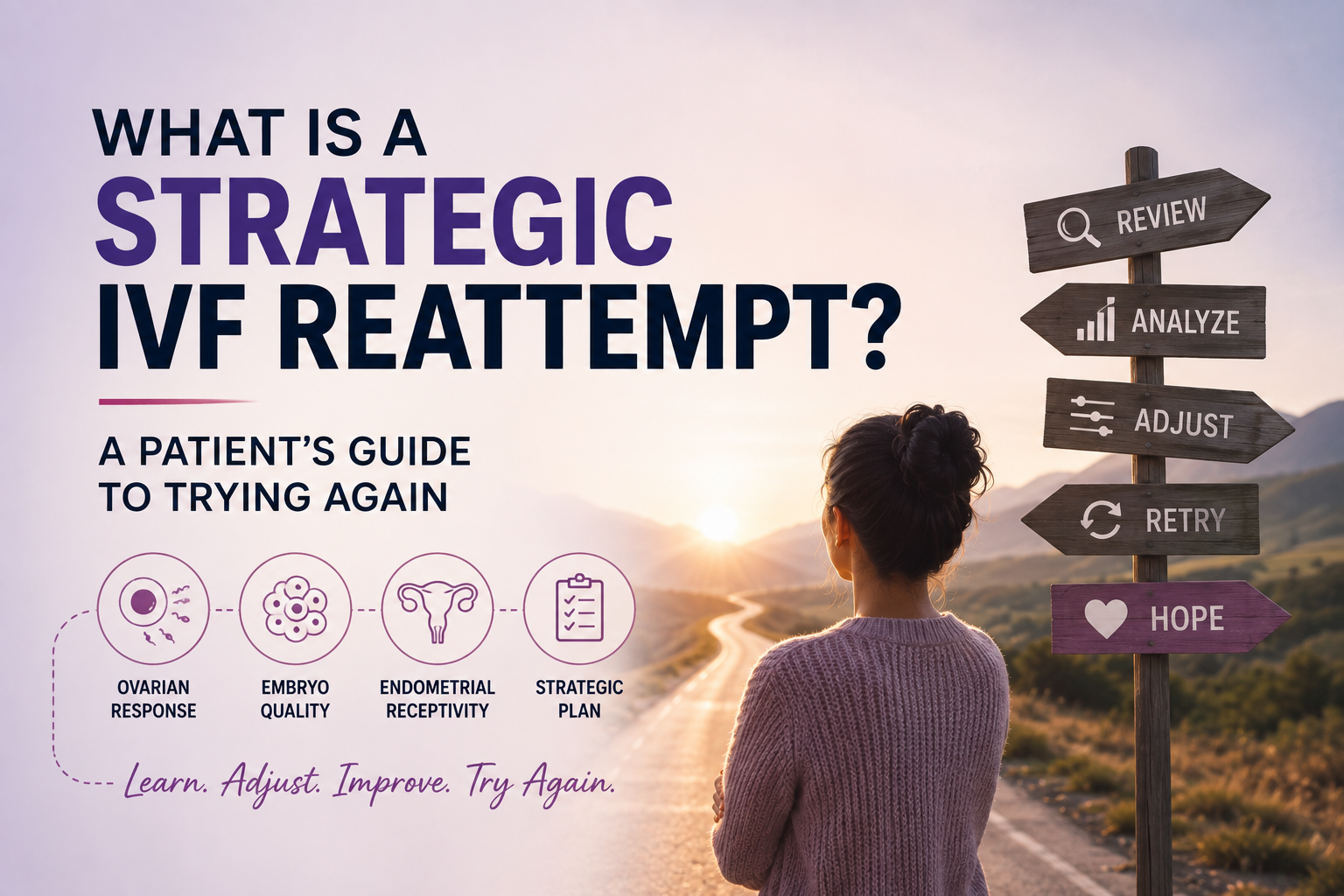
A strategic IVF reattempt is a structured review of a previous unsuccessful cycle — looking at how your body responded, the quality of the embryos, and the timing of transfer — before deciding what, if anything, should change in the next attempt. It is not the same as repeating the same protocol and hoping for a different outcome.
If your first cycle didn't result in a pregnancy, it's natural to feel discouraged and to wonder whether trying again is worth it. This article walks through what a strategic reattempt entails, how it differs from simply going through IVF again, and the questions to bring to your next appointment.
A Failed Cycle Is Information, Not Just a Setback
Every IVF cycle produces data: how your ovaries responded to stimulation, how many eggs were retrieved and matured, how embryos developed, and how your uterine lining looked at the time of transfer. A strategic reattempt uses that information rather than discarding it.
Instead of starting the next cycle from scratch, your fertility specialist reviews what happened in the last one and asks a specific question: does anything here explain why implantation didn't occur, and does anything need to change before trying again?
How a Strategic Reattempt Differs From "Just Trying Again"
Repeating a cycle without changes can make sense in some cases — sometimes a cycle simply doesn't succeed for reasons that aren't likely to repeat. But a strategic reattempt goes a step further and looks specifically at:
- Ovarian response. Did stimulation produce an appropriate number and quality of eggs, or does the protocol need adjusting?
- Embryo development. Were embryos reaching expected milestones, and is additional testing (such as genetic screening) worth considering?
- Endometrial receptivity. Was the uterine lining prepared and timed appropriately for transfer?
- Underlying factors. Are there hormonal, immunological, or anatomical factors that weren't addressed in the first cycle?
This review helps determine whether the next step should be a modified protocol, additional diagnostic testing, or in some cases a different treatment pathway altogether.
Who Is a Candidate for a Reattempt vs. an Alternative Path?
Not every patient benefits from simply repeating IVF, and not every failed cycle calls for a major protocol change. Your specialist will typically weigh factors like your age, ovarian reserve, the specific point at which the previous cycle didn't progress, and any test results from the first attempt.
This is a conversation to have directly with your fertility specialist — general information can help you ask better questions, but it isn't a substitute for a personalized assessment of your specific case.
Questions to Ask Your Fertility Specialist Before a Second Cycle
- What do you think happened in my last cycle, based on the data we have?
- Would you recommend changing my stimulation protocol, and why?
- Is further testing (genetic, immunological, uterine) recommended before we try again?
- What would make you suggest a different approach, like donor eggs or gestational carrier, instead of another standard cycle?
- What's a realistic timeline before starting a reattempt?
Frequently Asked Questions
What does "strategic reattempt" mean in IVF? It refers to reviewing the details of a previous unsuccessful cycle — ovarian response, embryo quality, and uterine receptivity — to inform decisions about the next cycle, rather than repeating the same protocol without changes.
Is a second IVF cycle more likely to succeed than the first? It depends on the individual case. For some patients, adjustments based on a review of the first cycle can improve the chances of success in a subsequent attempt. Your specialist can give you a realistic picture based on your specific results.
How long should I wait between IVF cycles? This varies by clinic and individual health factors, including physical recovery and emotional readiness. Your fertility specialist can recommend a timeline based on your situation.
Do I need new tests before trying again? Not always, but your specialist may recommend additional testing if the previous cycle raised questions about egg quality, embryo development, or uterine receptivity.
Talk to Your Fertility Specialist
A failed cycle can feel like a dead end, but it usually isn't. A strategic reattempt approach treats your first cycle as a source of useful information rather than a result to move past quickly. Bring your questions to your fertility specialist, and ask them to walk you through what your own cycle data suggests about the path forward.
This article is for general informational purposes and isn't a substitute for personalized medical advice. Talk to your fertility specialist about your specific situation before making treatment decisions.