Switching IVF Clinics After a Failed Cycle — and What Refund Programs Really Guarantee

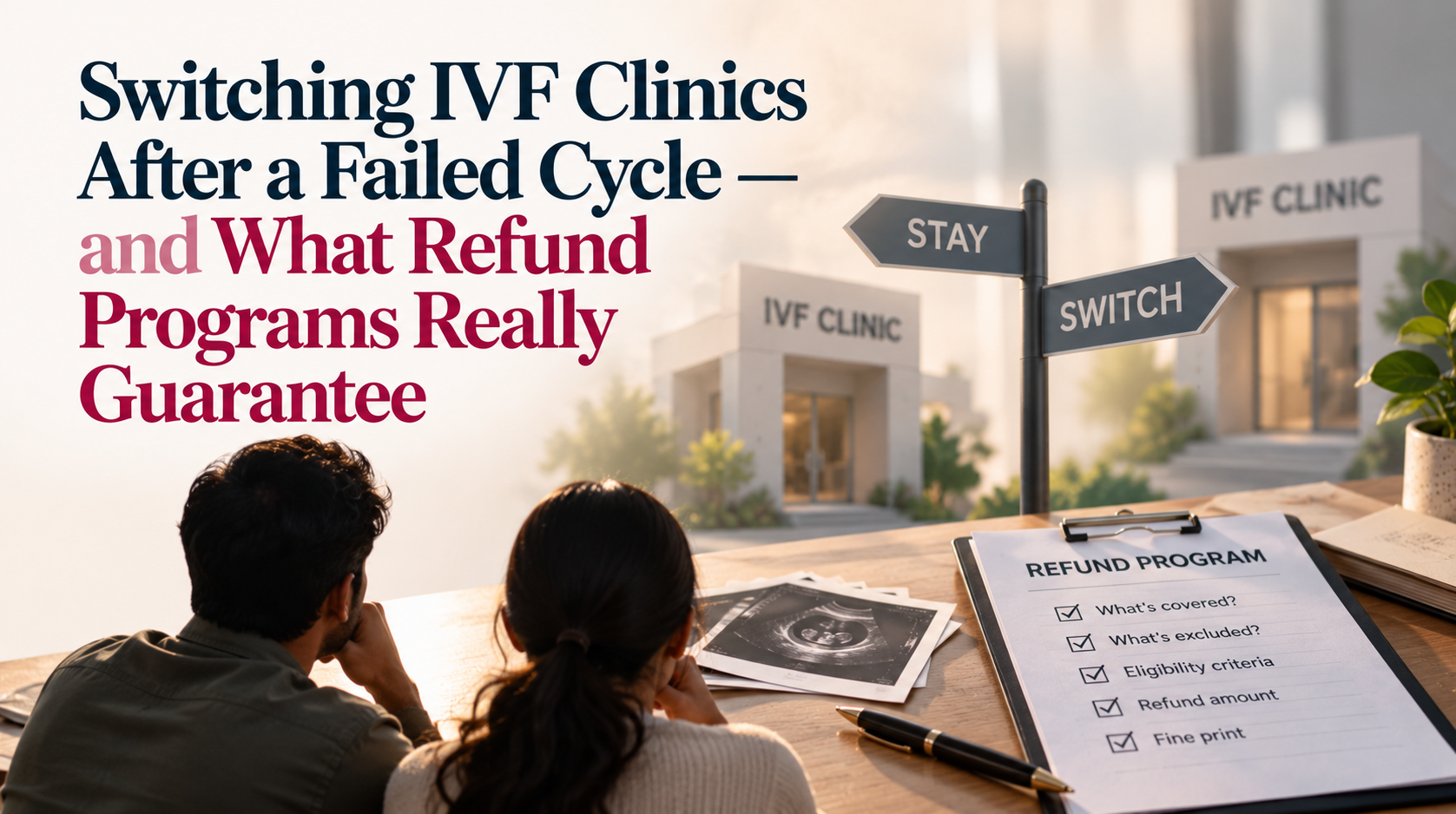
After a failed cycle, two separate questions tend to arrive at once: should you stay with your current clinic or start fresh somewhere else, and is one of the "money-back if it doesn't work" IVF packages you've seen advertised actually worth considering? They feel like one decision. They're not, and untangling them usually makes both easier to answer.
Should You Switch Clinics, or Try Again Where You Are?
Before switching is even the right question, it's worth knowing what should happen at your current clinic first: a real review of what your last cycle actually showed. A strategic reattempt looks specifically at how your ovaries responded to stimulation, how your embryos developed, whether your uterine lining was prepared and timed correctly, and whether anything in that data explains why implantation didn't happen. If your clinic is proposing to repeat the exact same protocol without walking you through this review, that's worth questioning directly — regardless of whether you ultimately stay or go.
That distinction matters because it reframes the switching decision. The question usually isn't "did this clinic fail me," since a single unsuccessful cycle often isn't evidence of anything being done wrong — IVF frequently takes more than one attempt to succeed even with excellent care. The more useful question is: can this clinic show me a specific, data-based reason for what happens differently next time, or are they asking me to simply try again and hope.
A few situations do make switching reasonable to consider seriously:
- Your clinic can't or won't walk you through what the data from your last cycle actually showed.
- You've had multiple cycles with no protocol change and no explanation of why.
- Communication has been consistently poor, rushed, or defensive when you've asked direct questions.
- You've lost confidence in the clinic for reasons unrelated to the outcome itself, such as billing transparency or how add-ons were handled.
What switching costs you, and what's worth asking before you do it: A new clinic starts largely from scratch. Even if your previous clinic shares your records, a new team hasn't watched your case unfold in real time, and some diagnostic testing may need to be redone rather than transferred. Ask a prospective new clinic directly: Will you request and review my full previous cycle data before recommending a protocol, or are you starting with a standard approach regardless of what happened last time? Their answer tells you whether switching is actually buying you a better-informed second attempt, or just a change of scenery with the same blind spots.
What "Money-Back" IVF Programs Actually Guarantee
You've likely seen these advertised — a clinic offering to refund your treatment cost if you don't have a baby, sometimes marketed as "shared risk" or a "guarantee" program. A small number of Indian clinics do offer structured versions of this. It's worth understanding exactly what's being promised, because the word "guarantee" is doing less work than it sounds like.
It's a financial guarantee, not a medical one — and that distinction is the whole design of the program. Under India's medical advertising rules, doctors and clinics are prohibited from promising a guaranteed clinical outcome — no clinic can legally or ethically promise you a baby. What these programs actually promise is narrower and more specific: if you complete an agreed number of cycles under the program's terms and don't achieve a live birth, you get a defined refund of what you paid into the package. The guarantee is about the money, not the medicine.
How these packages are typically structured: You pay a fixed package fee upfront, usually covering a set number of cycles — commonly framed as "up to three" attempts, including use of any embryos frozen along the way. If none of those attempts results in a baby, you receive a refund of the treatment package fee. What's almost always excluded from the refund: medications and hormone injections, which are billed and paid separately throughout and are non-refundable regardless of outcome; and often lab consumables and any elective add-ons taken along the way.
Eligibility is the part that changes everything, and it's stricter than the advertising suggests. These programs manage the clinic's financial risk by only accepting patients statistically likely to succeed within the covered attempts. That typically means a lower age, with patients commonly around <35 years at the start of the first cycle — along with adequate ovarian reserve markers, and specific exclusions for conditions that meaningfully lower the odds of success, like :
- Certain uterine conditions such as fibroids, a thin endometrial lining, adenomyosis, or Asherman syndrome
- Untreated hydrosalpinx, endometriosis
- Severe sperm abnormalities or high sperm DNA fragmentation
- low ovarian reserve, previous IVF failures, repeated pregnancy losses
If you don't meet the eligibility bar, you're not offered the program at all — you're simply quoted standard per-cycle pricing, and the advertised "guarantee" was never actually available to you in the first place.
Why the package fee is priced the way it is: A refund program isn't a discount — it's insurance the clinic is selling itself against your specific case failing, and it's priced accordingly. The upfront package fee is typically higher than what a single cycle would cost on its own, because the clinic is pricing in both your treatment and the statistical chance they'll have to refund it. For a patient who's a strong candidate and completes the covered cycles without success, the refund can be genuinely valuable. For a patient likely to conceive in cycle one, paying a multi-cycle package upfront may cost more than simply paying per cycle would have.
What to ask before signing anything:
- Get the refund percentage and exactly what it applies to in writing — the package fee only, or does it include medications?
- Get the full list of medical exclusion criteria and confirm in writing that you meet them, not just verbally at consultation.
- Ask what happens if you want to stop after one or two cycles rather than completing all covered attempts.
- Ask directly what happens to any frozen embryos if you don't complete the program or if you switch clinics partway through.
Bringing Both Decisions Together
If you're weighing a switch and a refund program at the same time, sequence the questions: first get a clear, specific answer from your current clinic about what your last cycle's data actually showed and whether an informed protocol change is genuinely on the table. Only once you know whether "staying" is actually a strategic option — not just a repeat — does it make sense to compare that against switching, and separately, against whether a refund program elsewhere is even something you'd be eligible for. Treating these as three separate, sequential questions, rather than one overwhelmed decision, usually makes the choice clearer than it feels right now.
Frequently Asked Questions
Should I switch IVF clinics after just one failed cycle?
Not necessarily. A single unsuccessful cycle is common and often isn't evidence of a problem with your clinic. What matters more is whether your clinic can walk you through a specific, data-based review of what happened and what would change next time. If they can't or won't, switching becomes more reasonable to consider.
What do IVF "money-back guarantee" programs in India actually refund?
Typically the treatment package fee, if you complete the covered number of cycles (often framed as up to three) without a live birth. Medications, hormone injections, and often lab consumables are usually excluded and non-refundable regardless of outcome. Always get the exact terms in writing.
Why can't every patient qualify for a refund program?
These programs are priced around statistical risk to the clinic. Eligibility typically requires a lower age, adequate ovarian reserve, and the absence of specific conditions — such as certain uterine abnormalities or severe male-factor issues — that would lower the odds of success within the covered attempts. Patients outside that criteria aren't offered the program.
Is a refund program's "guarantee" a promise that I'll have a baby?
No. Indian medical advertising rules prohibit clinics from promising a guaranteed clinical outcome. These programs guarantee a financial refund under specific conditions if a live birth doesn't occur within the covered attempts — the guarantee applies to the money, not the medical result.
Talk to a Fertility Specialist
Whether to switch clinics and whether a refund program makes sense are two different questions with two different answers. Start with a specific, honest review of what your last cycle actually showed — that answer usually makes both of the other decisions clearer.
This article is for general informational purposes and isn't a substitute for personalized medical advice. Talk to your fertility specialist about your specific situation before making treatment decisions.