Surrogacy Ban in India: Has It Reduced Exploitation or Pushed It Underground?

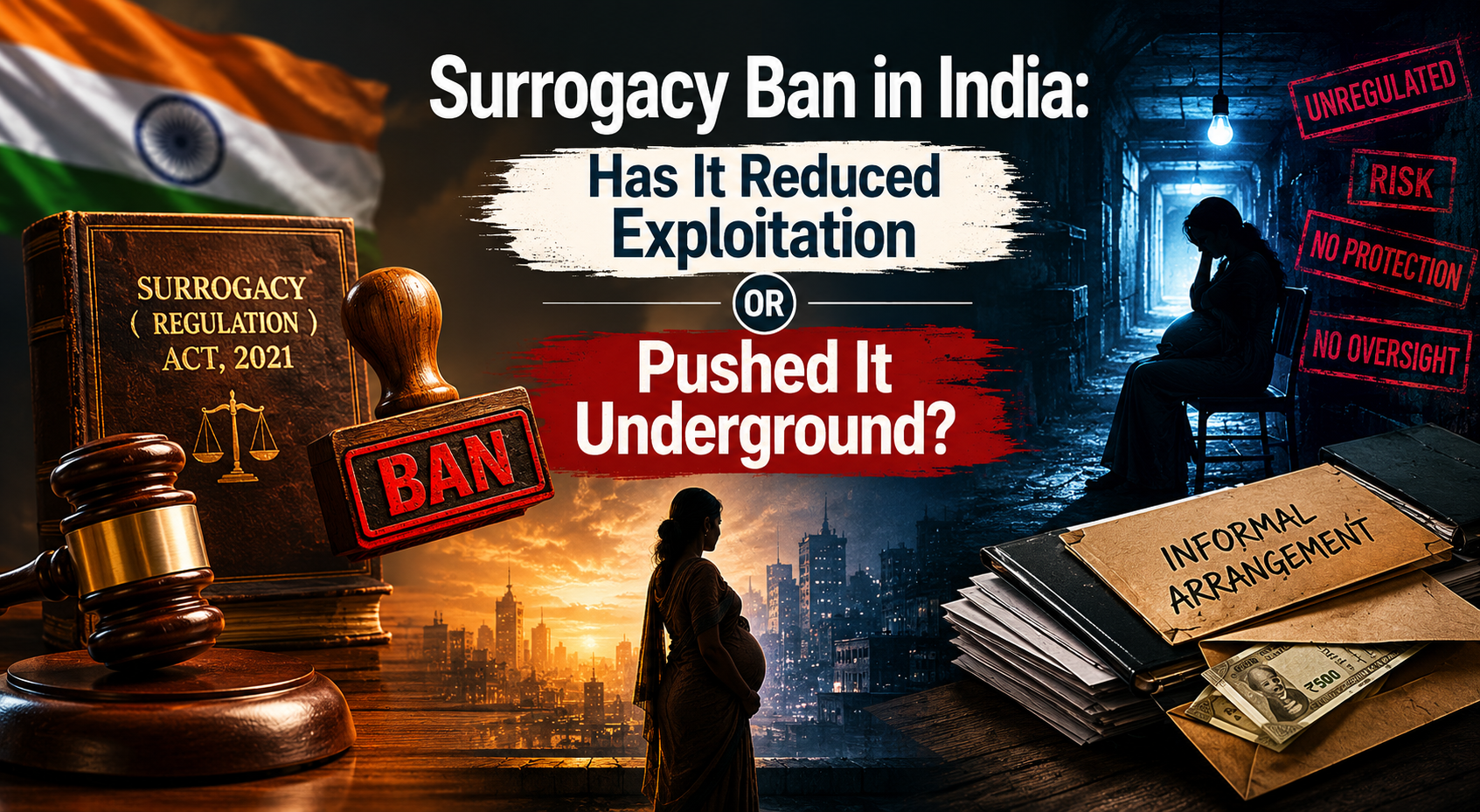
In recent years, India introduced strict regulations around surrogacy, with the stated goal of protecting women from exploitation.
Commercial surrogacy — once a rapidly growing industry — was effectively banned under the Surrogacy (Regulation) Act, 2021, allowing only altruistic surrogacy under tightly controlled conditions.
On the surface, the intent is clear and difficult to disagree with. If surrogacy involves vulnerable women, shouldn’t stronger regulations protect them?
But a more complex question has emerged since these rules came into effect: Has the ban actually reduced exploitation — or has it simply made it less visible?
What Changed After the Surrogacy Ban?
Before the regulation, India was one of the most prominent global destinations for surrogacy. Lower costs and fewer legal restrictions led to a surge in both domestic and international demand.
The new law introduced several key changes:
- Commercial surrogacy was prohibited
- Only altruistic surrogacy (without financial compensation beyond medical expenses) was permitted
- Strict eligibility criteria were introduced for both intended parents and surrogate mothers
- Close relatives were initially expected to act as surrogates (later interpretations have evolved, but restrictions remain significant)
The objective was to prevent financial coercion and the commodification of women’s bodies.
The Intended Impact: Reducing Exploitation
The reasoning behind the ban is grounded in real concerns.
In the earlier system:
- Some women entered surrogacy due to financial pressure
- There were reports of inadequate medical care and unclear contracts
- Power imbalances between intended parents, clinics, and surrogates raised ethical questions
Regulation aimed to:
- Protect vulnerable women
- Ensure informed consent
- Reduce the commercialisation of reproduction
From a policy standpoint, these are legitimate and important goals.
The Reality on the Ground: A More Complicated Picture
Since the ban, surrogacy has not disappeared — but it has become significantly harder to access through formal channels.
This has led to several unintended consequences:
1. Reduced Access for Intended Parents
Many individuals and couples who medically require surrogacy now face:
- Limited availability of eligible surrogates
- Lengthy approval processes
- Uncertainty around eligibility criteria
For some, this has meant:
- Delaying treatment
- Exploring options outside India
- Turning to informal networks
2. Emergence of Informal Arrangements
When a legitimate pathway becomes highly restrictive, alternative systems often emerge.
There are growing concerns that:
- Surrogacy arrangements may be happening outside regulated clinical frameworks
- Informal agreements may lack proper medical oversight or legal protection
- Surrogate mothers in such settings may actually be more vulnerable, not less
Because these arrangements are less visible, monitoring and safeguarding become more difficult.
3. Shift to Cross-Border Surrogacy
Some intended parents are now seeking surrogacy in other countries where regulations are more flexible.
While this creates access, it also introduces:
- Legal complexities across jurisdictions
- Citizenship and parentage challenges
- Higher overall costs
Why This Outcome Is Not Unusual in Policy Changes
This pattern is not unique to surrogacy.
In many areas of healthcare and regulation:
- Strict bans can reduce formal activity
- But they may also shift demand into less-regulated spaces
In the case of surrogacy, demand has not disappeared. It has simply become harder to track and manage within a structured system.
What Patients and Families Should Understand
For individuals considering surrogacy in India today, the reality is more complex than before.
It is important to understand that:
- Surrogacy is now tightly regulated, and eligibility criteria are strict
- Legal compliance is essential to avoid future complications
- Informal or unregulated arrangements carry significant medical and legal risks
- Cross-border options require careful legal planning
Rather than assuming availability, intended parents should approach surrogacy with:
- clear information
- realistic expectations
- guidance from experienced professionals
The Larger Question: Protection vs Access
The surrogacy ban in India reflects a genuine attempt to address ethical concerns.
However, it also raises an important policy question:
Can regulation protect vulnerable individuals without making access so restrictive that it drives the practice underground?
This balance is difficult.
Too little regulation risks exploitation. Too many restrictions may reduce transparency and oversight.
The long-term impact of the law will likely depend on how policies evolve to address both protection and access.
Conclusion
India’s surrogacy regulations were introduced with the intention of creating a safer, more ethical framework for assisted reproduction.
While the ban has reduced the visibility of commercial surrogacy, it has also made access more limited and, in some cases, less transparent.
For patients, the key takeaway is not just understanding the law, but recognising how it shapes real-world options.
For policymakers and healthcare providers, the ongoing challenge remains: ensuring that protection does not come at the cost of pushing vulnerable practices out of sight.
Frequently Asked Questions
What is the surrogacy law in India? India regulates surrogacy under the Surrogacy (Regulation) Act, 2021, which allows only altruistic surrogacy and prohibits commercial arrangements.
Is commercial surrogacy completely banned in India? Yes. Commercial surrogacy, where the surrogate receives financial compensation beyond medical expenses, is not permitted under current law.
Who is eligible for surrogacy in India? Eligibility is restricted and depends on factors such as marital status, medical necessity, and regulatory approvals. Intended parents must meet specific criteria defined by the law.
Can surrogacy still happen in India after the ban? Yes, but only under regulated, altruistic conditions. Access is more limited compared to earlier years.
Are there risks in informal surrogacy arrangements? Yes. Informal or unregulated arrangements may lack proper medical care, legal protection, and oversight, increasing risks for both the surrogate and intended parents.
Do people go abroad for surrogacy from India? Some intended parents explore surrogacy in other countries. However, this involves additional legal, financial, and logistical complexities.