Is IVF Becoming a Metro-Only Service in India? The Growing Access Gap

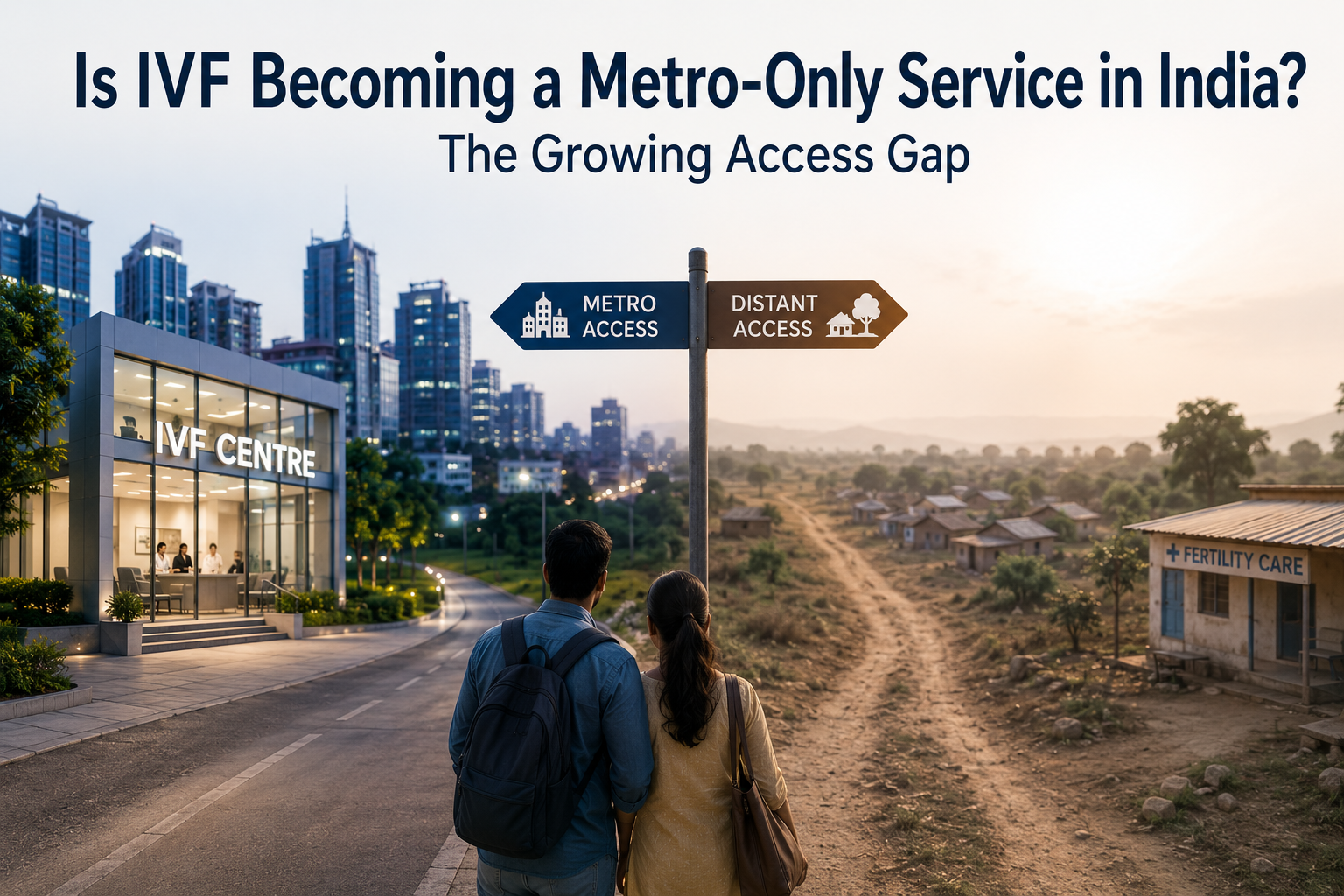
A couple in Bangalore can choose between multiple IVF clinics within a short drive.
A couple in a smaller city may need to travel hundreds of kilometres for the same treatment.
The science is the same.
The access isn't.
As fertility care expands across India, an important question is emerging:
Is IVF becoming increasingly concentrated in major cities, leaving many patients with fewer options and greater barriers to treatment?
Why IVF Naturally Concentrates in Major Cities
Over the last decade, India has seen rapid growth in fertility services. Yet many of the country's most advanced IVF centres remain concentrated in metro cities such as Bangalore, Mumbai, Delhi, Chennai, and Hyderabad.
There are practical reasons for this.
An IVF clinic is far more than a consultation room and an operating theatre. High-quality fertility treatment depends on sophisticated laboratories, specialised equipment, and highly trained embryologists.
Building and maintaining these facilities requires significant investment. Recruiting experienced fertility specialists and embryologists can also be challenging, particularly outside large urban centres.
As a result, many clinics naturally establish themselves in cities where infrastructure, talent, and patient demand are already concentrated.
Why Many Patients Still Travel to Metro Cities for IVF
Even as fertility services expand across India, many patients continue to travel to cities such as Bangalore, Mumbai, Delhi, Chennai, and Hyderabad for treatment.
One reason is the concentration of advanced IVF laboratories in these locations. Complex fertility cases often require experienced embryologists, specialised equipment, and laboratory infrastructure that may not be available in every city.
Some patients are also referred to larger centres after unsuccessful treatment attempts elsewhere, particularly when advanced procedures or more specialised care are required.
In addition, larger IVF clinics often have established reputations and higher treatment volumes, which can influence patient confidence when making important healthcare decisions.
This does not mean high-quality IVF care is only available in metro cities. Many fertility centres outside major urban areas provide excellent treatment and continue to expand their capabilities.
However, for patients seeking advanced fertility treatment, geography still plays a significant role in where care is accessed.
The Hidden Cost of Distance
When discussing access to IVF, cost is often the first concern that comes to mind.
But for many patients, distance creates an additional burden that is rarely discussed.
IVF treatment often requires multiple visits for:
- Consultations
- Blood tests
- Ultrasound scans
- Egg retrieval procedures
- Embryo transfers
- Follow-up appointments
For patients travelling from smaller towns or neighbouring districts, these visits can involve:
- Long journeys
- Accommodation expenses
- Time away from work
- Dependence on family support
In some cases, the cost of travelling for treatment can become almost as significant as the treatment itself.
How Geography Can Influence Treatment Decisions
Access challenges do more than create inconvenience.
They can influence medical decisions.
Some patients may delay seeking fertility care because specialist services are not easily accessible.
Others may choose a clinic based primarily on proximity rather than expertise or laboratory quality.
Some may miss follow-up appointments or postpone treatment cycles because travel becomes difficult to manage.
These decisions are understandable, but they can affect the overall treatment journey.
A Simple Way to Think About It
Consider two patients with the same fertility diagnosis.
Patient A lives in Bangalore and can reach a fertility specialist within 30 minutes. Appointments, scans, and procedures can be scheduled with minimal disruption to daily life.
Patient B lives in a Tier 3 city and must travel several hundred kilometres for each major stage of treatment. Every visit requires planning, travel expenses, and time away from work.
The medical condition is the same.
The treatment experience is not.
This difference can shape how quickly treatment begins, how consistently it continues, and how stressful the process becomes.
Is the Gap Starting to Close?
The picture is not entirely one-sided.
Over the last few years, fertility care has begun expanding beyond major metros.
Many IVF providers now operate satellite centres that allow patients to complete consultations, scans, and preliminary assessments closer to home.
Teleconsultations have also made it easier for patients to connect with fertility specialists without travelling for every discussion.
At the same time, awareness of fertility treatment is increasing across India, creating demand in cities that previously had limited access to specialised care.
These developments are helping narrow the gap, but access remains uneven.
What Patients Should Consider
If IVF treatment requires travel, planning can make the process more manageable.
Patients may benefit from asking:
How many visits will require travel to the main centre?
Some parts of treatment can often be coordinated locally, while others must take place at the IVF facility.
Can scans and blood tests be completed closer to home?
Reducing unnecessary travel can lower both costs and stress.
How experienced is the clinic's embryology team?
Laboratory quality often matters more than location alone.
Have travel costs been factored into the overall budget?
Treatment planning should include logistical expenses, not just medical fees.
Conclusion
India has made remarkable progress in fertility treatment over the last decade.
Yet access to that care remains uneven.
For many patients, the biggest challenge is no longer whether IVF exists—it is whether high-quality IVF is available within reach.
Improving success rates will always remain important.
But as fertility services continue to grow, ensuring that patients across India can access those services may become one of the industry's most important challenges.
Frequently Asked Questions
Is IVF available in Tier 2 and Tier 3 cities in India?
Yes. IVF services are increasingly available outside major metros, although the range of services and laboratory infrastructure may vary between centres.
Why are most IVF clinics located in metro cities?
Metro cities typically have better access to specialised infrastructure, experienced embryologists, fertility specialists, and larger patient populations.
Why do many patients travel to metro cities for IVF treatment?
Many patients travel to metro cities because advanced IVF laboratories, specialised fertility experts, and certain treatment options are often concentrated in larger urban centres. Some patients are also referred to these centres for complex fertility cases.
Can IVF treatment be completed remotely?
No. Certain procedures such as egg retrieval and embryo transfer must be performed at an IVF centre. However, consultations, some scans, and follow-ups may be managed remotely or through satellite clinics.
Does travelling affect IVF treatment outcomes?
Travel itself does not directly affect outcomes, but logistical challenges may influence treatment timing, follow-up visits, and the overall patient experience.
Should I choose the nearest IVF clinic or the most experienced one?
Location is important, but laboratory quality, embryologist expertise, transparency, and overall clinical experience should also be considered when choosing a clinic.
Are fertility services becoming more accessible in India?
Yes. Telemedicine, satellite centres, and growing awareness are helping improve access, although significant regional gaps still exist.