Genetic Testing in IVF: Where PGT Genuinely Helps and Where It May Be Overused

When patients begin IVF treatment today, one recommendation often appears early in the conversation: genetic testing of embryos.
Clinics may explain that this testing can identify embryos with the highest chance of success or reduce the risk of genetic abnormalities. For many patients, it sounds like an obvious step. If technology can help choose the healthiest embryo, why not use it?
But within the fertility field, the conversation around genetic testing is becoming more nuanced. While genetic testing can be extremely valuable in certain situations, many specialists now acknowledge that it may not benefit every IVF patient equally.
Understanding where it truly helps — and where its benefits are less clear — can help patients make more informed decisions during treatment.
What Genetic Testing in IVF Actually Means
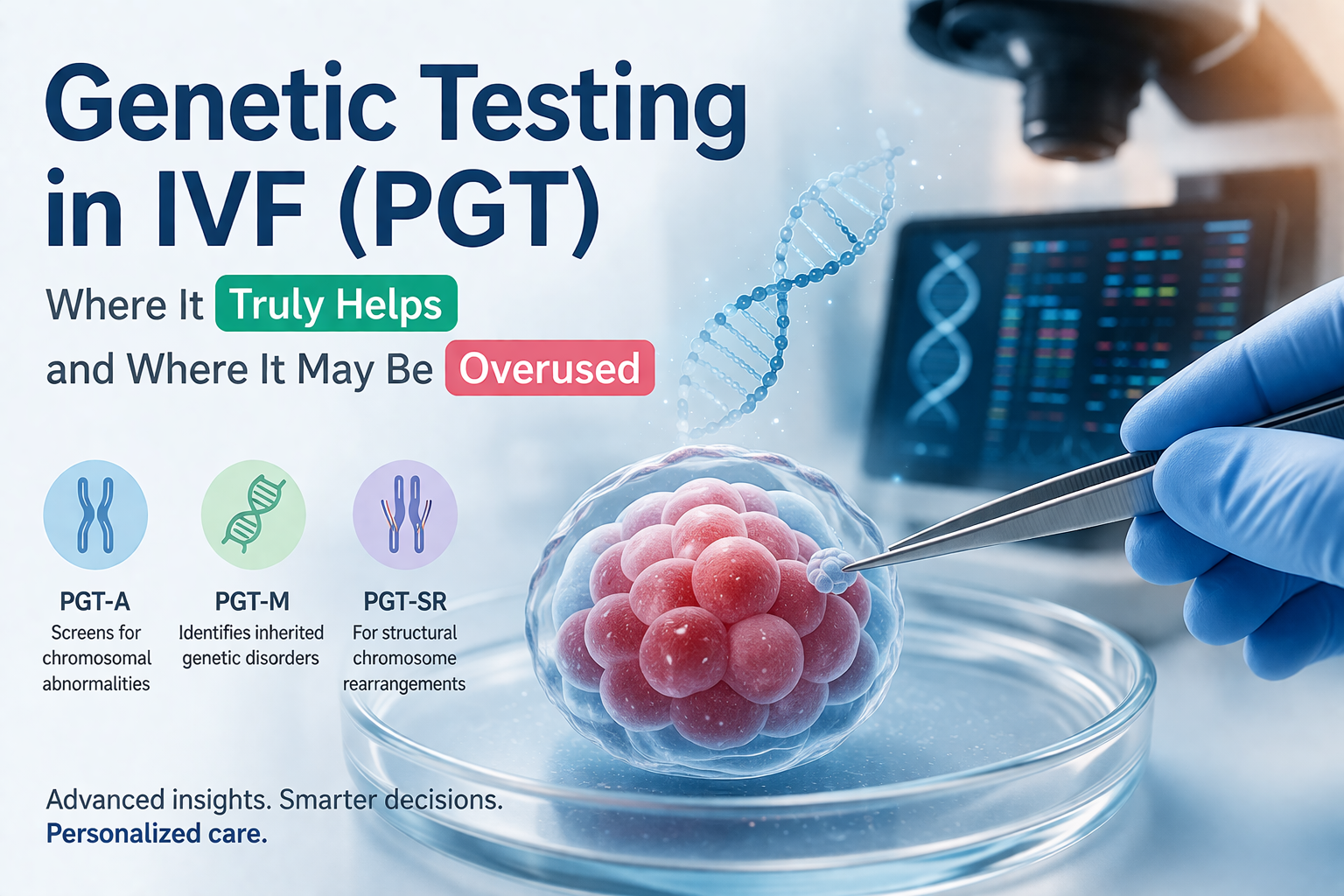
Genetic testing in IVF is commonly referred to as PGT, or Preimplantation Genetic Testing. It involves analyzing a small sample of cells called trophectoderm from a blastocyst before it is transferred to the uterus.
The goal is to identify genetic or chromosomal abnormalities that could affect pregnancy outcomes.
There are three main types of PGT used in IVF.
PGT-A (Preimplantation Genetic Testing for Aneuploidy)This test checks whether an embryo has the correct number of chromosomes. Embryos with missing or extra chromosomes are less likely to implant and more likely to result in miscarriage or abnormal babies.
PGT-M (Preimplantation Genetic Testing for Monogenic Disease)This test is used when one or both parents carry a known genetic condition, such as thalassemia or cystic fibrosis. It allows doctors to identify embryos that do not carry that particular genetic disorder.
PGT-SR (Preimplantation Genetic Testing for Structural Rearrangement)This test is indicated when one or both partners are having structural rearrangements, such as translocations or inversions, in chromosomes. This test helps to identify embryos with the correct copy of chromosomes without any imbalance, thereby enhancing the chances of success and reducing miscarriages.
While all three tests involve genetic screening, they are used for very different clinical reasons.
Where PGT Clearly Helps Patients
In certain medical situations, genetic testing can be a powerful tool in IVF.
For couples who carry known inherited genetic disorders, PGT-M can significantly reduce the risk of passing that condition to a child. In these cases, the value of testing is well established.
PGT may also help in situations such as:
- Couples with known genetic conditions in the family
- Repeated miscarriages and recurrent IVF failures are linked to chromosomal abnormalities
- Some cases of advanced maternal age, where chromosomal errors become more common
In these contexts, genetic testing can help doctors select embryos that have a higher likelihood of developing into a healthy pregnancy.
Where the Debate Around PGT Is Growing
The conversation becomes more complex when genetic testing — particularly PGT-A — is recommended for all IVF patients as a routine step.
Many clinics offer PGT-A as part of standard IVF packages, often with the expectation that it improves success rates. However, the scientific evidence is still evolving.
Some researchers and fertility specialists have raised important questions, including:
- Whether PGT-A improves live birth rates in younger patients with good-quality embryos
- Whether embryos labelled “abnormal” might still have the potential to develop normally
- Whether mosaic embryos (those with mixed cell populations) can still lead to healthy pregnancies
Because embryo development is biologically complex, genetic testing results do not always translate perfectly into clinical outcomes.
This has led some experts to caution that PGT-A may be used more broadly than necessary in certain cases.
Why Genetic Testing Became So Widely Recommended
Several factors have contributed to the rapid growth of genetic testing in IVF.
First, IVF treatment is emotionally and financially demanding. Patients understandably want to maximize their chances of success in each cycle.
Second, PGT can help reduce the likelihood of transferring embryos with clear chromosomal abnormalities, which may decrease the risk of early miscarriage.
Third, advances in laboratory technology have made genetic testing easier to perform, leading many clinics to integrate it into their treatment protocols.
While these developments have expanded access to testing, they have also made it more important to match the technology carefully to each patient’s medical situation.
What Patients Should Realistically Expect from PGT
Genetic testing can provide valuable information about embryos, but it is not a guarantee of success.
Even embryos that test normal still depend on several biological factors for a successful pregnancy, including:
- Egg quality
- Uterine environment
- Hormonal balance
- Overall reproductive health
For some patients, PGT may help reduce uncertainty in the IVF process. For others, the added cost and complexity may not significantly improve outcomes.
The most important factor is individualized medical guidance, rather than assuming that more testing always leads to better results.
What to Ask Your IVF Clinic Before Choosing Genetic Testing
If genetic testing is recommended during IVF, asking a few clear questions can help you understand whether it is necessary in your situation.
Why is PGT being recommended in my case?Ask whether there is a specific medical reason for testing or if it is being offered routinely.
Which type of testing is being proposed — PGT-A or PGT-M or PGT-SR?Understanding the purpose of the test can clarify what information it will provide.
Will PGT increase my chances of pregnancy?The answer may differ depending on your age, medical history, and embryo quality.
What additional costs are involved?Genetic testing can significantly increase the total cost of an IVF cycle.
Clear explanations from your doctor can help ensure that the decision is based on your individual circumstances.
Conclusion
Genetic testing is one of the most important technological advances in modern IVF. In the right situations — particularly when there is a known genetic condition — it can play a crucial role in helping families avoid serious inherited diseases.
At the same time, the benefits of routine genetic screening for all IVF patients remain a topic of ongoing discussion among fertility specialists.
For patients, the key is not simply choosing the most advanced technology, but understanding when that technology genuinely improves outcomes and when it may offer limited additional benefit.
Thoughtful medical guidance and transparent communication remain the most valuable tools in fertility treatment.
Frequently Asked Questions
What is PGT in IVF?
PGT, or Preimplantation Genetic Testing, is a laboratory test performed on embryos during IVF. A small sample of cells is taken from the embryo and analyzed to detect genetic or chromosomal abnormalities before the embryo is transferred to the uterus.
What is the difference between PGT-A and PGT-M?
PGT-A screens embryos for chromosomal abnormalities, such as extra or missing chromosomes. PGT-M is used when parents carry a known genetic disorder and helps identify embryos that do not inherit that condition.
Does genetic testing improve IVF success rates?
Genetic testing may improve outcomes in certain situations, particularly when there is a known genetic condition or repeated chromosomal errors. However, evidence showing that PGT improves success rates for all IVF patients is still evolving.
Is genetic testing necessary for every IVF patient?
No. While PGT can be helpful in specific medical situations, it is not required for all IVF cycles. The decision to use genetic testing should depend on factors such as age, medical history, and genetic risk.
Does PGT guarantee a healthy baby?
No. Genetic testing can reduce the risk of certain chromosomal or inherited conditions, but it cannot guarantee a successful pregnancy or a completely healthy baby. Many other biological factors influence pregnancy outcomes.
Does genetic testing increase the cost of IVF?
Yes. PGT involves specialized laboratory procedures and genetic analysis, which can significantly increase the total cost of an IVF cycle. Patients should discuss the full financial implications with their clinic before deciding.